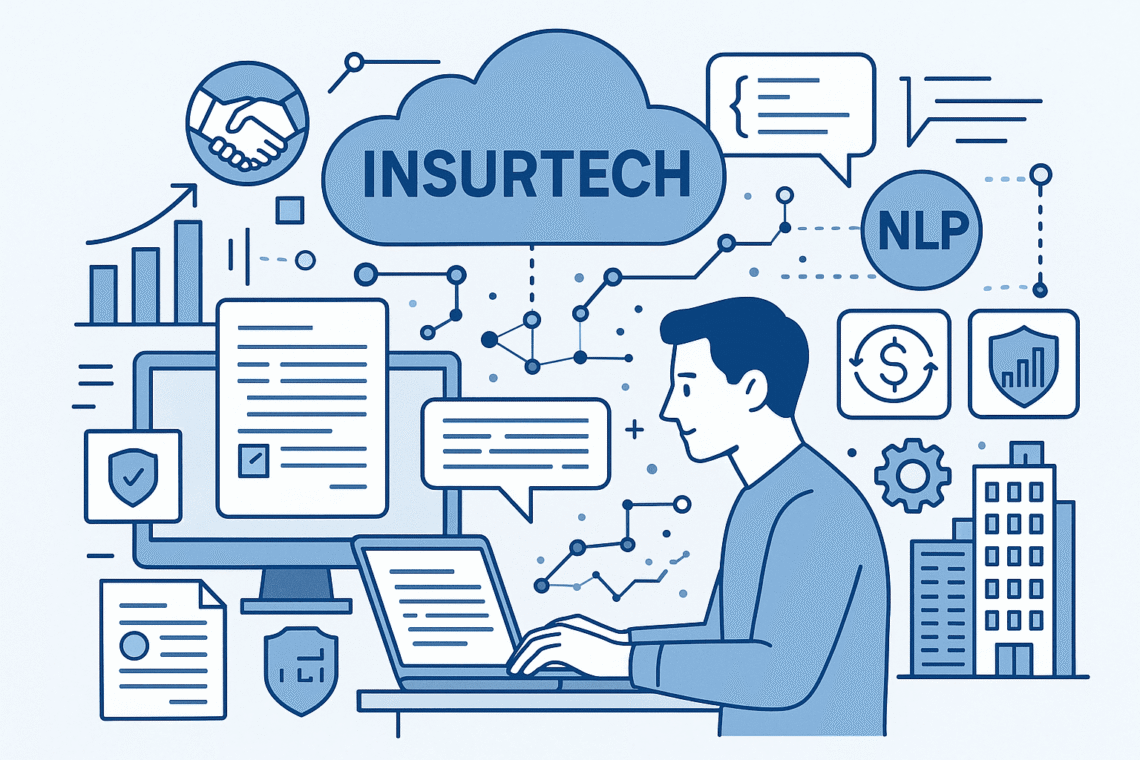
InsurTech is a booming sector, especially with the integration of Natural Language Processing (NLP) and alternative data. These technologies are transforming how insurers approach risk, underwriting, and claims management. Here’s a deeper dive into how NLP and alternative data are being leveraged in commercial insurance:
1. Risk Classification and Underwriting
- NLP & Alternative Data: Traditionally, underwriting relies heavily on structured data (like historical loss data). With NLP, insurers can extract valuable insights from unstructured text, such as customer emails, social media feeds, news articles, or regulatory filings.
- Example: Startups in the InsurTech space are creating solutions that scan news articles, financial reports, or even satellite images to assess risk factors like natural disasters, geopolitical events, or market fluctuations.
- Outcome: NLP allows insurers to enhance risk profiling, improving decision-making by integrating broader sources of information, enabling more accurate risk classification.
2. Claims Management
- Automated Claims Processing: NLP can extract key details from unstructured text in claims forms, emails, and chat conversations. This reduces manual review time and speeds up claims settlement.
- Sentiment Analysis: Insurers can use NLP to analyze customer sentiment from claims data, identifying potential fraud or prioritizing high-priority claims based on urgency or severity.
- Example: For example, using sentiment analysis on customer complaints or claims narratives to detect fraud or spot suspicious claims that may need further investigation.
- Outcome: This results in more efficient claims processing and the ability to identify patterns that human analysts may miss.
3. Fraud Detection
- Pattern Recognition: NLP can help detect inconsistencies or anomalies in text data, such as policyholder claims, that could suggest fraudulent activity. By analyzing historical claims data, insurers can use machine learning algorithms to spot suspicious claims based on patterns found in unstructured text.
- Example: NLP-powered models can analyze unstructured text in customer communications (emails, phone transcripts) and flag unusual language that could indicate fraud.
- Outcome: Reduces fraud, which leads to cost savings and improved profitability for insurers.
4. Personalization and Pricing
- Alternative Data and Pricing Models: InsurTech startups are increasingly looking at alternative data sources, such as social media activity, IoT devices, and even transaction history, to personalize pricing models.
- Example: NLP can be used to analyze customer reviews or social media posts to understand an individual’s behavior or preferences. This, combined with traditional data (like driving behavior data from telematics), can help create a more personalized premium.
- Outcome: Tailored insurance products that align better with customers’ actual behavior or preferences, leading to higher satisfaction and retention.
5. Customer Support and Chatbots
- AI-powered Chatbots: Insurers are using NLP-based chatbots to improve customer service, automate responses to frequently asked questions, and assist with policy management. These chatbots can parse unstructured text to offer intelligent, context-aware responses.
- Example: Insurers can deploy NLP-based virtual assistants to guide customers through the claims process or provide policy information.
- Outcome: 24/7 availability and better customer engagement, reducing the burden on human agents and improving customer satisfaction.
6. Regulatory Compliance and Reporting
- Text Mining for Regulatory Compliance: Insurers need to monitor large volumes of documents to stay compliant with regulations. NLP can automate the process of reading and interpreting regulatory documents, ensuring that policies adhere to the latest requirements.
- Example: Startups are developing solutions that scan and analyze regulatory changes and alert insurers about necessary updates to policies or business practices.
- Outcome: Reduced risk of non-compliance and operational inefficiencies by automating compliance tracking.
7. Market Insights and Competitor Analysis
- Alternative Data from External Sources: By applying NLP techniques to unstructured external data (such as news articles, blogs, or industry reports), insurers can gain insights into market trends, competitor strategies, and emerging risks.
- Example: Startups use NLP algorithms to track competitor pricing, changes in industry regulations, or shifts in public sentiment. This data can inform strategic decisions like market expansion or product development.
- Outcome: Helps insurers stay ahead of industry trends and respond proactively to market changes.
Notable Startups and Examples:
- Trōv: Uses AI and NLP to create flexible, on-demand insurance products, particularly for personal items. They process unstructured customer data (such as photos and descriptions of items) to offer tailored pricing.
- Lemonade: Leverages AI-driven underwriting and claims management, using NLP for faster claims processing and improved customer service.
- Zesty.ai: Uses NLP and alternative data sources like satellite imagery to assess property risks, especially for natural disasters, improving underwriting accuracy for commercial property insurance.
Challenges to Overcome:
- Data Privacy and Ethics: The use of alternative data and NLP must be done with care, particularly with respect to privacy regulations like GDPR and CCPA.
- Quality of Data: Unstructured data can be noisy, incomplete, or biased, which can lead to inaccurate models if not properly managed.
- Model Transparency: Many insurers may struggle with the opacity of AI-driven decisions, making it challenging to explain automated risk assessments or claims outcomes.
In summary, NLP and alternative data are reshaping how insurers approach risk, claims, and customer service in commercial insurance. By extracting meaningful insights from unstructured data, insurers can make smarter decisions, improve operational efficiencies, and offer more personalized products. The challenge now is how to scale these technologies and maintain trust with customers while adhering to regulatory standards.